

If you’ve ever searched “how to grow hair faster,” you’ve probably noticed two extremes: miracle promises on one end, and vague advice like “be patient” on the other.
The truth lives somewhere in between.
Hair growth can be supported, encouraged, and optimized—but only when we understand how hair actually grows, why it slows down, and what the scalp truly needs to stay active over time.
Hair Growth Is Not About Speed—It’s About Conditions
Hair doesn’t grow faster because we want it to.
It grows better when conditions are right.
Every hair strand grows from a follicle embedded deep in the scalp. That follicle depends on:
- Consistent blood flow
- Oxygen and nutrient delivery
- A calm, balanced scalp environment
- Stable growth cycles
When any of these are disrupted, growth slows—not because the hair is “weak,” but because the scalp is underperforming.

Why Hair Growth Slows Down Over Time
Many people associate slower hair growth with aging alone, but that’s only part of the story.
Common contributors include:
Reduced Scalp Circulation
As we age, microcirculation naturally decreases. Less blood flow means fewer nutrients reaching the follicles.
Chronic Scalp Tension & Inflammation
Tightness, dryness, or sensitivity can subtly restrict follicle function.
Lifestyle Stress
High cortisol levels are linked to premature follicle transition into the shedding phase.
Product Buildup
Silicones, dry shampoo residue, and environmental pollutants can clog follicles over time.
None of these are dramatic on their own—but together, they quietly shorten the hair’s growth phase.
The Hair Growth Cycle: What You Can (and Can’t) Control
Hair growth follows three stages:
- Anagen (Growth Phase) – years
- Catagen (Transition Phase) – weeks
- Telogen (Resting Phase) – months
You can’t change how fast hair grows genetically.
But you can influence how long it stays in the growth phase—and how healthy each strand becomes.
That’s where scalp-focused care makes the biggest difference.
Why Modern Hair Care Is Shifting Toward the Scalp
For decades, hair care focused almost entirely on strands: shampoos, conditioners, masks.
But healthier-looking hair doesn’t always mean healthier growing hair.
Today’s research-backed approach starts deeper—at the scalp level—because:
- Follicles respond to circulation
- Cells respond to light and heat
- Consistent stimulation supports cellular energy
This shift explains the growing interest in non-invasive scalp therapy technologies.
How Light & Thermal Scalp Therapy Support Hair Growth
Low-Level Light Therapy (LLLT)
Red and near-infrared wavelengths are widely studied for their ability to:
- Improve scalp blood flow
- Support ATP (cellular energy) production
- Reduce oxidative stress around follicles
Far-Infrared Heat
Unlike surface heat, far-infrared therapy gently warms tissue, encouraging:
- Relaxation of tight scalp muscles
- Improved nutrient diffusion
- A more balanced scalp environment
Used consistently, these therapies don’t “force” hair to grow—they help follicles function closer to their natural potential.
Where At-Home Scalp Devices Fit Into a Real Routine
For many people, clinic treatments are expensive, time-consuming, or simply unrealistic long-term.
At-home devices offer a different value:
- Private and convenient
- Easy to maintain consistency
- Designed for cumulative results
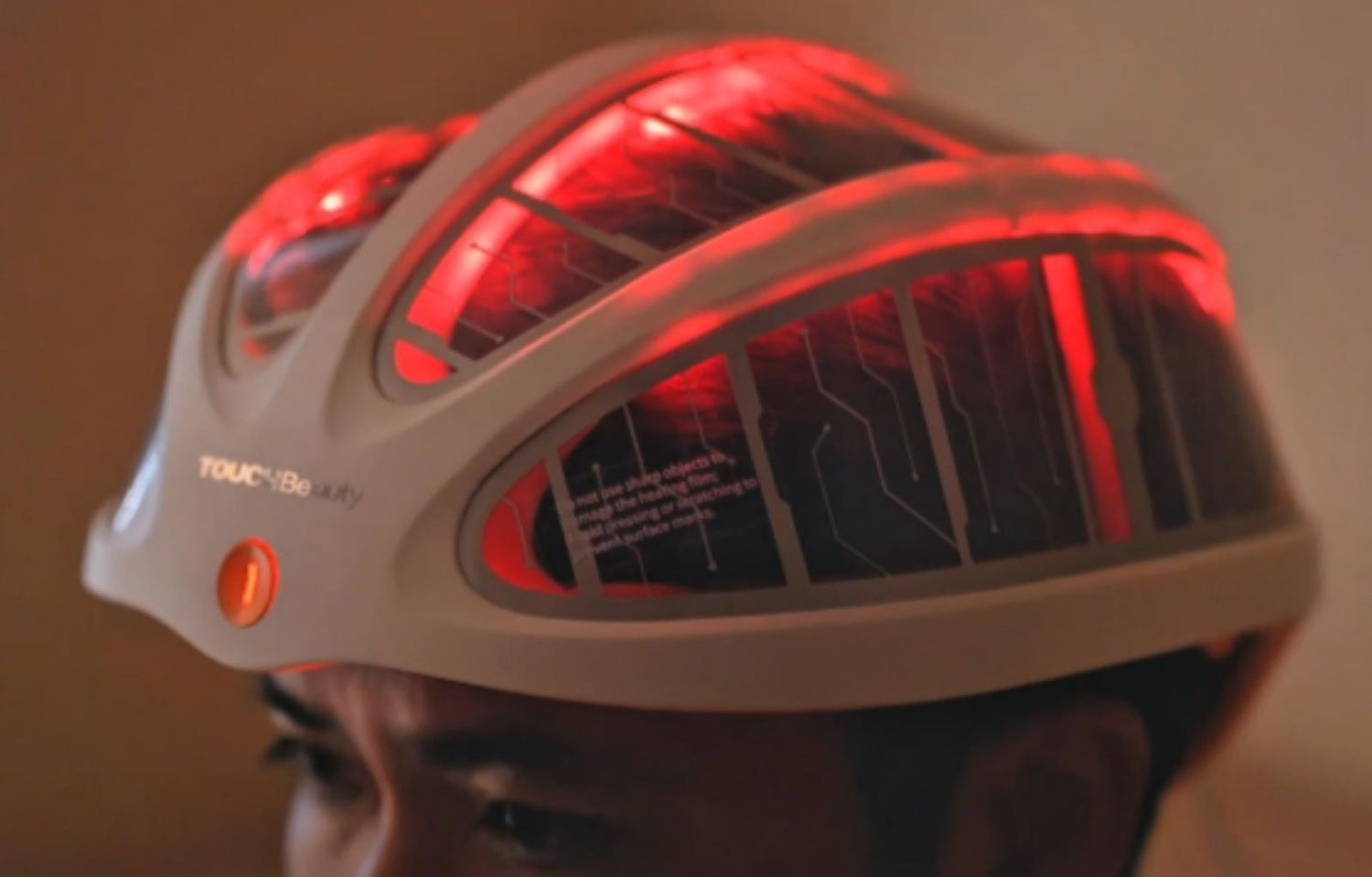
This is where TOUCHBeauty VITA Scalp Rejuvenating Helmet becomes part of a habit, not a treatment plan.

Why TOUCHBeauty VITA Focuses on the Scalp—Not the Hair
The VITA Scalp Rejuvenating Helmet was designed around one principle:
support the scalp, and the hair will follow.
Key design considerations include:
- Full-scalp coverage to reach crown, sides, and back evenly
- Far-infrared therapy for gentle, comfortable warmth
- Hands-free design that fits into daily life
- Non-invasive technology, suitable for long-term use
It’s not meant to replace good hair care habits—but to enhance them.
👉 Learn more:
https://touchbeauty.com/products/vita-scalp-rejuvenating-helmet

A Practical Hair Growth Routine That’s Actually Sustainable
Morning
- Gentle scalp cleansing (no aggressive scrubbing)
- Lightweight leave-in or scalp mist if needed
Evening (3–5x per week)
- Use VITA Scalp Rejuvenating Helmet for 10–15 minutes
- Light finger massage afterward (optional)
Weekly
- Clarify scalp once
- Reduce heat styling where possible
This routine isn’t about doing more—it’s about doing the right things consistently.
When Will You See Results?
Hair growth is gradual, and that’s not a failure—it’s biology.
Most users report:
- Improved scalp comfort within weeks
- Reduced shedding after 1–2 months
- Stronger, healthier-feeling hair over 3–6 months
The most meaningful changes happen quietly—then suddenly become visible.
Confidence Grows When You Stop Fighting Your Hair
Chasing instant growth often leads to frustration. Supporting your scalp leads to progress.
Healthy hair growth isn’t about control—it’s about cooperation with your body.
When you shift your focus from “faster” to “better,” growth becomes something you build, not chase.
Final Thought
If you’re serious about long-term hair health, scalp care isn’t optional—it’s foundational.
Tools like the TOUCHBeauty VITA Scalp Rejuvenating Helmet exist not to promise miracles, but to support consistency, comfort, and science-backed care—at home, on your terms.
👉 Explore the VITA helmet here:
https://touchbeauty.com/products/vita-scalp-rejuvenating-helmet


Laat een reactie achter
Alle reacties worden gemodereerd voordat ze worden gepubliceerd.
Deze site wordt beschermd door hCaptcha en het privacybeleid en de servicevoorwaarden van hCaptcha zijn van toepassing.